

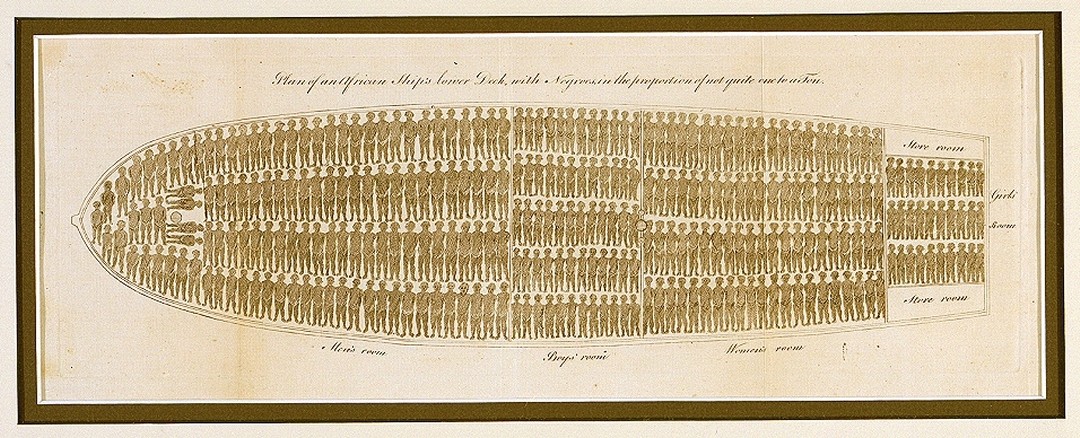
The Terrible “Middle Passage.” Graphic illustration from 1789 of a slave vessel’s hold: “Plan of an African Ship’s lower deck, with Negroes in the proportion of not quite one to a Ton.” Abolitionists (those vigorously against slavery) displayed images such as this which needed little explanation to instill empathy for the victims while provoking anger and disdain for slavers and slaveowners.
Shelves were often installed between the standard deck configuration to accommodate more human cargo. Still, it took nearly four centuries before ships were designed with any form of ventilation below decks. Prior to this, oxygen deprivation must be added to the better known horrors of being cramped and chained together for up to four months with little food or clean water in the most inhumane, degrading, damp, and unsanitary conditions possible. Vermin, sickness and disease were fellow travelers, and there was no bedding to lay upon or insulation against heat or chill. Women, especially, were subjected to sexual abuse by crewmembers.
Captives were closely observed during their visits topside to ensure they washed, exercised, and posed no threat to the crew or themselves. A high wooden “barricado” was permanently built to separate the fore and aft sections so the crew could retreat aft with the women should an insurrection occur. Only one person at a time could pass through its portal, and firearms and cannon were kept ready for any onslaught. Sharks were known to follow slaving vessels to feast on the sick and deceased cast overboard. In 1781, sixty diseased Africans died before the Zong’s captain, claiming insurrection to collect on insurance, threw 133 of the sick into the sea.
Inhabitants of port cities sometimes claimed they could smell a slave ship’s approach before it could be sighted. For those clinging to life, arrival was as much dreaded as it was hoped for. American-bound vessels were required to hoist a yellow flag warning away any who might approach as passengers were quarantined for another week before receiving the harbor physician’s approval to disembark. Some ports maintained “Pest Houses” on outlying islands to confine the sick. All told, up to twenty percent of of the captives might be lost, not to mention the devastating psychological harm done.
Such images of a slaver’s cargo reduced even the stoniest of heart to tears, and exemplify the intense and unyielding duty of Abolitionists to end the sin of slavery above and beyond any other cause.